
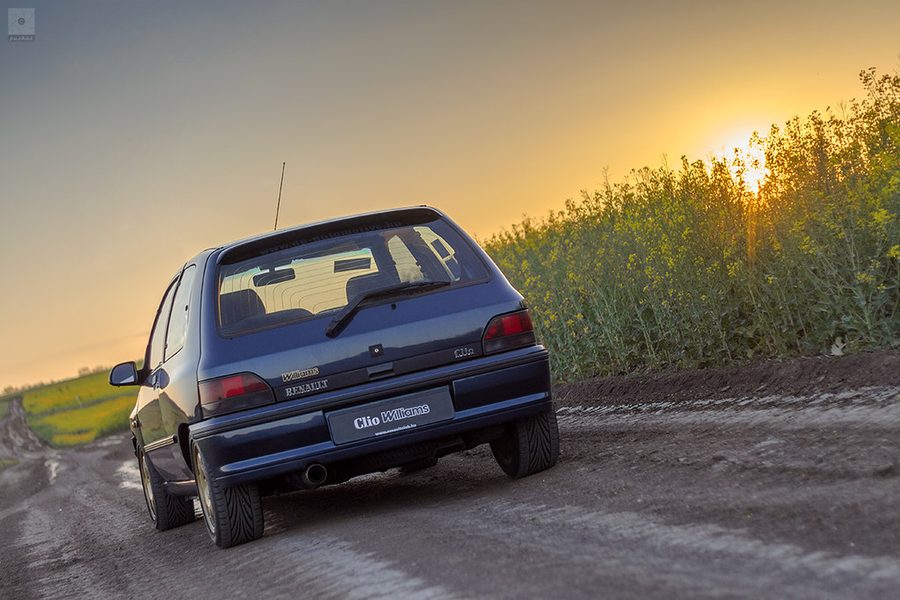
Thirty years after its launch, the Clio Williams is one of the most sought-after French youngtimers. Good ones sell quickly, and so do the less good ones, sometimes too quickly. Here are the points we recommend checking before you take the plunge, drawn from many conversations with owners and restorers.
A bit of history: a "limited" edition that wasn't
Launched in 1993, the Clio Williams took its name from the Formula 1 team that was winning everything at the time with a Renault engine. Under the bonnet: a 150 bhp 2.0-litre 16-valve engine in a car weighing around 990 kg. It was announced as a limited edition for rally homologation, with a numbered plaque on the dashboard.
Given its success, Renault ended up building far more: around 12,000 in total, split between phase 1 (1993-1994), phase 2 and export series, including the Williams 2 and Williams 3 sold in the UK. That history explains some of the confusion you come across in adverts today.
1. Authenticity comes first
The Williams has been widely copied: plenty of Clio 16S models have been "converted" with gold wheels and badges. Check that the paperwork is consistent (type and chassis number) and don't hesitate to ask the specialist clubs and forums, who know the quirks of each phase. The numbered plaque alone proves nothing: it can be removed and sold on.
2. Phase 1 or phase 2: the telltale details
The two phases differ in many details, starting with the "Williams" badges: gold on phase 1, gold and blue on phase 2. A car that mixes the two has often been repaired or "updated". Nothing serious in itself, but it should be reflected in the price.
3. Bodywork and underside
Many Williams have been used for rallies, hillclimbs or track days. Inspect the chassis rails, the rear axle mounting points and the sills for signs of impact or repair. Corrosion is generally moderate, but a car stored outdoors for a long time can hold some surprises.
4. Mechanicals: a tough but demanding engine
The 2.0 16V is robust if it has been looked after. Ask for the invoices, especially for the cambelt, listen to the engine from cold and check that it doesn't smoke. Also check the gear change, the clutch and the rear axle, which is often tired on high-mileage cars.
5. The interior and the little details
Specific seats, numbered plaque, gear knob: a Williams interior ages quickly when the car has been used every day. Under the bonnet, the original labels (engine cover, warnings, headlight aim) often disappear over successive cleans. None of this is a deal-breaker, but it gives you a good idea of how well the car has been cared for.
Our workshop was born in 2007 from the restoration of a phase 1 Clio Williams: it all started with the search for its original stickers. If you are starting a restoration, our complete phase 1 set and our complete phase 2 set bring together all the graphics, inside and out.